For someone that wants to target redfish on artificial lure and fly
Fly and Artificial Lure Fishing for Sight-Cast Targets
Redfish in Panama City Beach for anglers who pursue shallow-water fish with fly rods and conventional tackle
Redfish hold in grass flats, oyster bars, and tidal creeks along our back bay systems, where they feed aggressively on crabs, shrimp, and baitfish in water shallow enough to see their backs and tails. Redwater Guide Company runs Redfish charters for up to two anglers who want to target these fish using artificial lures and fly presentations instead of live or cut bait. The approach is visual and active, requiring constant movement and accurate casts to fish that spook easily in skinny water.
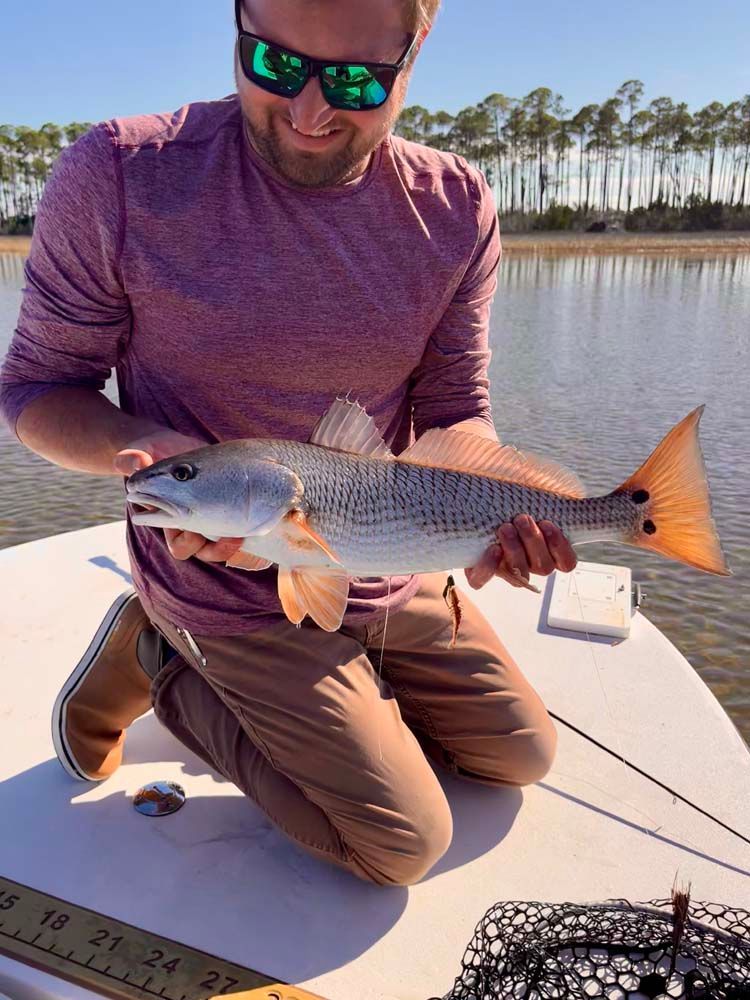
Targeting Redfish on artificial lures and flies means you're casting to visible fish or likely holding areas where current, structure, and forage overlap. The fish respond to an assortment of lures and flies that change every day. You'll see strikes happen in real time, often with the fish's head and shoulders breaking the surface as it crushes a fly or lure.
Arrange a Redfish charter if you prefer active casting and sight-fishing techniques over soaking bait.

Fly and artificial presentations require reading water conditions and fish behavior to predict where Redfish will be holding based on tide stage, wind direction, and time of day. You'll make casts to feeding fish or likely zones, working lures or flies through the strike zone until a fish commits. The two-angler limit allows focused coaching and reduces crowding on the casting platform, which matters when you're working tight to structure or approaching nervous fish in clear, shallow water.
When you hook a Redfish on light tackle or fly gear, the fight is sustained and powerful, with long initial runs followed by dogged, head-shaking resistance near the boat. You'll notice the bronze-to-copper coloring and the prominent black spot near the tail that gives the species its nickname. The fish's mouth is hard and downturned, adapted for rooting in bottom structure, and hooksets with artificial lures or fly require a firm set.Fly and artificial presentations require reading water conditions and fish behavior to predict where Redfish will be holding based on tide stage, wind direction, and time of day. You'll make casts to feeding fish or likely zones, working lures or flies through the strike zone until a fish commits. The two-angler limit allows focused coaching and reduces crowding on the casting platform, which matters when you're working tight to structure or approaching nervous fish in clear, shallow water.
Redwater Guide Company supplies fly rods, spinning tackle, and a selection of proven lure patterns, though experienced anglers often bring their own gear and favorite fly boxes. The charter focuses on locating fish and presenting lures or flies in ways that trigger strikes from fish that have seen significant fishing pressure and learned to refuse poorly presented baits.